
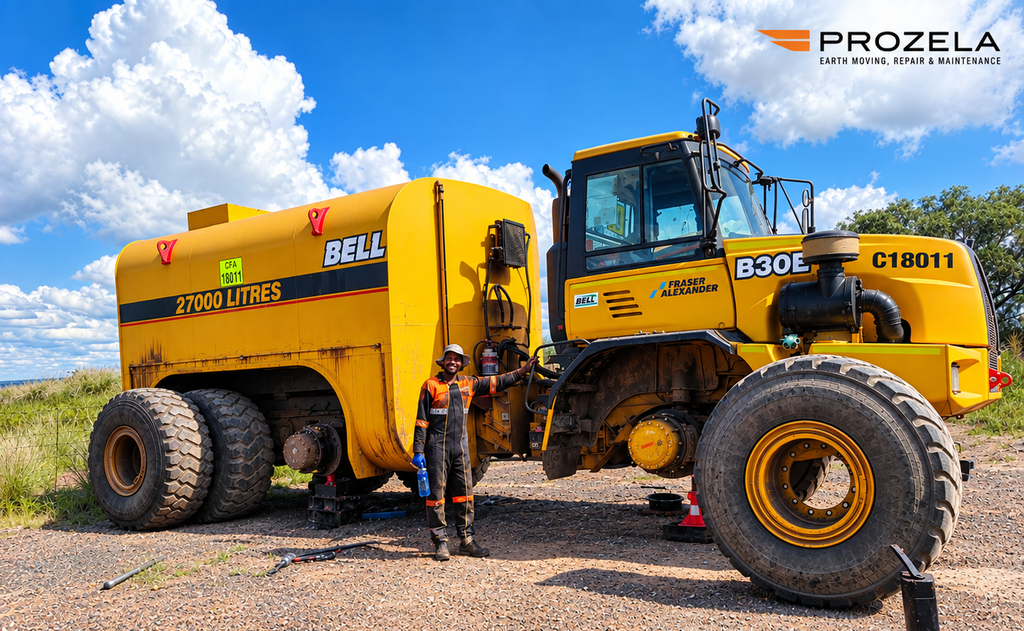
In industries such as mining, construction and earthmoving, heavy machinery is at the centre of daily operations. These machines carry heavy loads, operate in demanding environments and, most importantly, are often operated around people.
That is why equipment maintenance should never be viewed simply as an operational expense, but also a safety intervention.
When heavy machinery or equipment is not maintained or serviced regularly, the consequences can go far beyond an unexpected breakdown. The risks include injuries, fatal accidents, property damage and damage to the environment.
Recognising when equipment is no longer safe
One of the most important parts of equipment safety is recognising the warning signs before a minor problem becomes a serious incident.
There are several signs that a machine may no longer be operating safely. These include warning lights and alarms in the cab, oil leaks, excessive vibration and unusual or excessive noise. Defects identified during pre-start checks are also important warning signs, as are machines that are experiencing excessive breakdowns.
Operators play an important role in identifying these issues. Warning signs must be recorded and reported, and operators should follow the required pre-shift inspection guide before operating the equipment.
Where a defect is identified as a “no go” item, the machine should not be operated.
This is an important part of creating a safe working environment. A machine should not be operated simply because production needs to continue. If the equipment is not safe to operate, it needs to be taken out of service until the necessary repairs have been completed.
The cost of delaying preventative maintenance
When companies delay preventative maintenance or continue operating equipment with known faults, the risks increase.
The number of incidents and accidents can rise, while production can drop and operating costs can increase. What may initially appear to be a decision to save money by postponing maintenance can ultimately result in greater costs through breakdowns, downtime, repairs, accidents and lost productivity.
In heavy industries, equipment is expected to perform under demanding conditions. Waiting for something to fail before addressing it is therefore not an effective maintenance strategy.
Preventative maintenance protects people and equipment
Regular preventative maintenance helps ensure that equipment remains safe, reliable and fit for operation.
It does this in several ways. Preventative maintenance helps prevent unexpected failures, improves braking and steering safety, identifies hydraulic hazards and reduces fire risks. It also helps ensure that safety devices remain operational and can prevent structural failures that could have serious consequences.
Another important benefit is that it reduces operator exposure to hazards. When equipment is properly maintained, operators are less likely to be placed in situations where they have to deal with recurring faults or unsafe temporary repairs.
Ultimately, preventative maintenance supports a proactive safety culture. Instead of waiting for an incident or equipment failure to force action, potential problems can be identified and addressed before they become something more serious.
This proactive approach is particularly important when it comes to the components and practices that have the greatest impact on safe equipment operation.
There are several areas that deserve particular attention when it comes to preventative maintenance, including:
- Brakes, steering and suspension components are critical.
These systems play a crucial role in suspending, controlling and stopping the equipment and its load. When you consider the size and weight of heavy machinery, a failure in any of these areas can have serious consequences.
Regular inspection and maintenance of these components is therefore not simply about keeping the machine productive. It is about ensuring that the machine can be controlled and stopped safely when it matters most.
Maintenance is an investment in people and productivity
For businesses that see servicing and preventative maintenance as an expense, it is important to look at the bigger picture.
One of the effective ways to reduce costs, improve productivity and minimise workplace injuries is to prioritise proper equipment maintenance through proactive planning, regular inspections and timely repairs.
Investing in preventative maintenance not only extends the lifespan of equipment. It also promotes a safer, more efficient and more productive working environment.
In the end, maintenance is about more than keeping a machine running.
It is about making sure that the person operating that machine can go home safely at the end of the day.